using CairoMakie
a = [3, 7, 5, 3]
b = [1, 3, 7, 4]
δ = π/2
t = LinRange(-π, π, 300)
f = Figure(size=(1600, 360))
for i in 1:4
    x = sin.( a[i] .* t .+ δ )
    y = sin.( b[i] .* t )
    lines(f[1, i], x, y, axis=(; aspect = 1))
end
f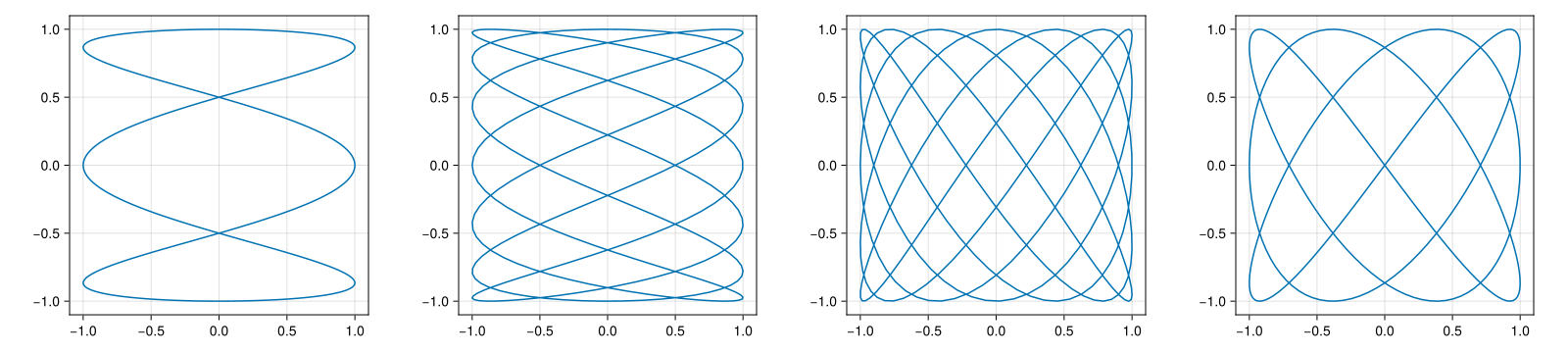
Introduction to Scientific Computing
Julia is a relatively new, modern programming language designed for scientific computing.
A code example:
using CairoMakie
a = [3, 7, 5, 3]
b = [1, 3, 7, 4]
δ = π/2
t = LinRange(-π, π, 300)
f = Figure(size=(1600, 360))
for i in 1:4
x = sin.( a[i] .* t .+ δ )
y = sin.( b[i] .* t )
lines(f[1, i], x, y, axis=(; aspect = 1))
end
f
In their 2012 inaugural blog post Why we created Julia, the developers provide an insightful and humorous overview of their objectives and motivations for creating Julia.
A photo of Stefan Karpinski, Viral Shah, Jeff Bezanson, and Alan Edelman can be found here: https://news.mit.edu/2018/julia-language-co-creators-win-james-wilkinson-prize-numerical-software-1226.
open source
high-performance programming language for technical computing
JIT compilation
read-eval-print loop (REPL)a built-in package manager
huge ecosystem of easily installable packages, e.g.
Makie